
Customers’ choices
Why does the customer buy – or move on?
Understand what customers compare, what makes them hesitate and how they experience the advice. Hear their thoughts on products, offers and service directly.
Popscale for retail & e-commerce
Understand why customers buy, leave or return products, in stores and online. AI interviews capture customers’ and employees’ experiences. Practice with AI customers develops customer conversations using your products and ways of working.
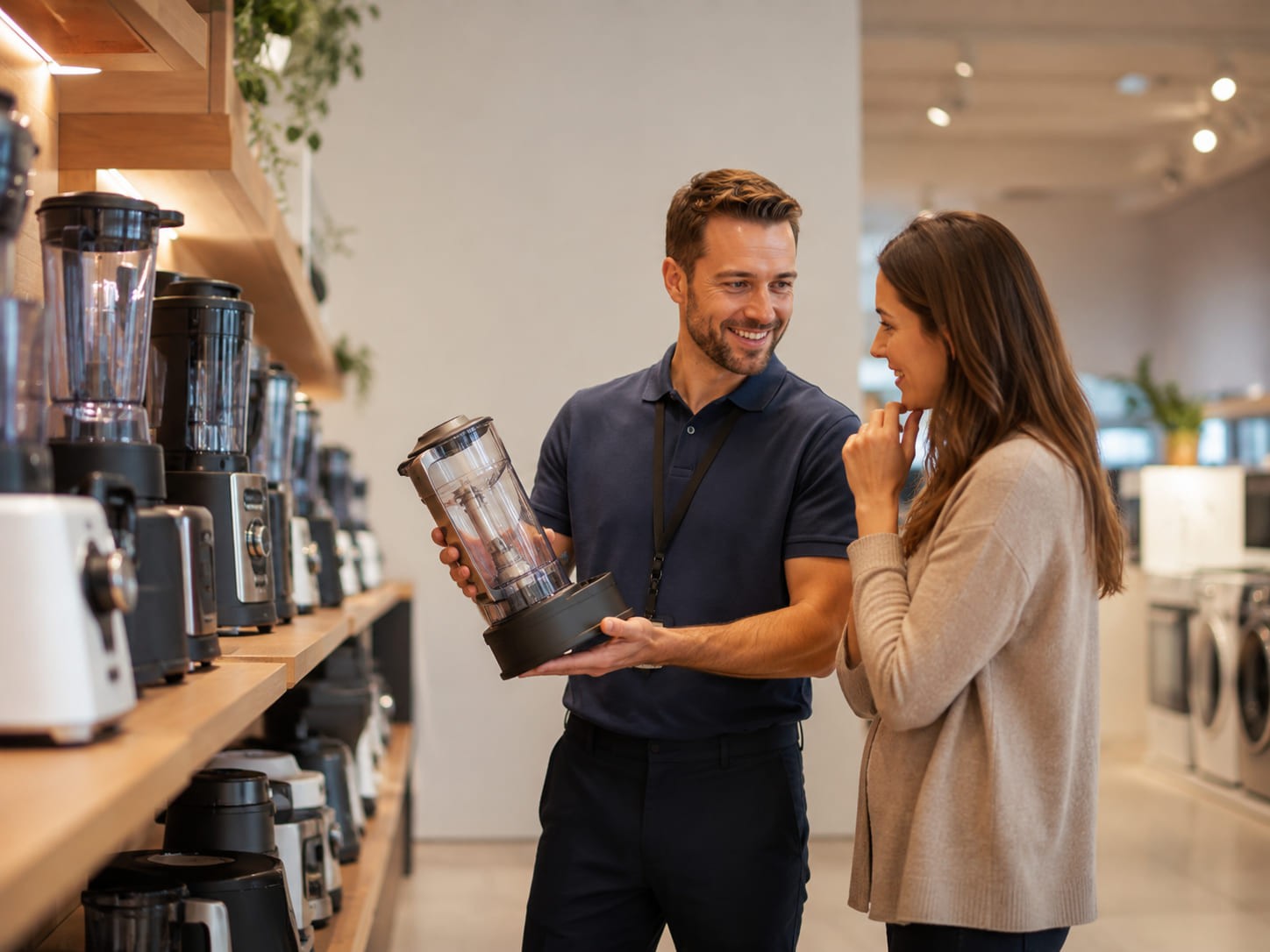
For stores, e-commerce and retail groups in electronics, telecom, home improvement, fashion, beauty, sports, home furnishings and more.
Studies · Retail, e-commerce and customer choices
What makes customers buy, abandon a purchase or return a product? How do stores, e-commerce, warehouses and customer service work together? Let AI interview customers and employees. Start with a few questions that can guide your next improvement.
Customers’ choices
Understand what customers compare, what makes them hesitate and how they experience the advice. Hear their thoughts on products, offers and service directly.
The team’s customer knowledge
Capture what your team encounters every day. Find out which product differences are hard to explain and which specific approaches may be worth sharing.
Everyday store operations
Ask how procedures, systems and cooperation between stores, warehouses and central teams work. Find obstacles, ways to simplify and ideas from the people doing the work.
Promotions and launches
Capture customers’ reactions and employees’ experiences of a promotion or launch. Understand what is clear, what is missing and what support is needed.
Fictional example · Comparing products
A retail group wants to understand what helps customers choose a TV. Ask staff about specific interactions and follow up with customers’ own perspectives.
Questions for the team
Store employee
“I ask how the TV will be used and show two models playing the same clip. I let the customer describe the differences they see and what matters to them.”
An idea to explore further
This is a specific approach to try. Ask more colleagues how they compare products and customers what actually helped them choose.
A possible next step
Try a shared approach to product comparisons at one store. Ask customers what has become clearer and staff what support they need before sharing it more widely.
From a quick question on the shop floor to a purchase that takes careful thought. Start with situations in your own stores.

Phones & plans
A customer is comparing a new phone and a mobile plan. Understand their usage, recommend the right combination and explain the total cost and terms – including when promotional pricing ends.
Home improvement
A customer is choosing paint, flooring or tools. Practice understanding their plans and experience before suggesting a product – and getting help when you do not know.
Fashion & sports
Build rapport without being pushy. Find out what the customer is looking for and help with fit, use or an alternative when the right size is unavailable.
Furniture & interiors
The customer is unhappy after delivery. Listen, find out what happened and explain the next step within your procedures, without making promises you cannot keep.
“This costs less online. Why should I buy it from you?”
Your turn. What would you say?
“It says my parcel has been delivered, but I haven’t received anything. I don’t want to pay for it twice.”
Your turn. What would you say?
“I want something that lasts, but I don’t understand why this one costs so much more. What difference will it make to me?”
Your turn. What would you say?
“I do what we’ve been taught, but customers still say they’re just browsing. What should I do differently?”
Your turn. What would you say?
This is how a roleplay could begin. In Journeys, you respond by speaking and get feedback based on your facts, methods and procedures.
Journeys in practice
The customer wants a TV for a bright living room and has found a lower price online. What do you need to know before recommending one?
From a fictional practice conversation
Your products, terms and approach to advice form the basis for the AI customers and assessment. In the fictional TV example, the employee gets feedback on needs questions, budget and how they handle the comparison.

Speaking
From induction to independence
New employees need time and support to become independent. Let them review the basics and practice customer questions, giving store managers more time for individual coaching.

Episodes & Flashcards
Introduce your products, customer promise and store routines. Revisit the essentials in short sessions.
Coaching & Roleplay
Explain a product difference in your own words. Then meet an AI customer, get feedback and try again.
Challenges
Use a needs question in a real customer interaction. Reflect afterwards and get feedback on your reflection.
An example Journey. Activities can also be used independently. The same principle works for a new collection, campaign or product launch.
More about faster onboardingLeadership on the shop floor
Setting a sales target is one thing. Helping a colleague develop is another. Let store managers practice feedback, coaching and difficult conversations before having them with their team.
Example feedback conversation
An employee often presents the most expensive model before the customer has explained their needs. How do you raise it without dampening their enthusiasm?
An opening to try
“I heard you recommend the top model straight away. How were you thinking about what the customer needed?”
Explore the situation with an AI coach, try your wording and get feedback. Practice describing an observation, listening to the employee’s perspective and agreeing on a concrete next step.
Practice results and business results answer different questions. Use both to decide what to do next.
Progress & follow-up
Follow participation, attempts and practice results in Insights. Track time to independence, coaching time and relevant sales measures separately in your own records.
Explore InsightsCustomer & employee perspectives
Explore customer hesitation and the team’s toughest questions through AI-led Interviews. Studies produces its own report to inform the next improvement.
More about customer and employee insightsCommon questions
Practice can cover both quick customer help and longer advice conversations in areas such as home improvement, electronics, phones and plans, fashion, sports and interiors. This applies to both brand-owned stores and retailers. Start with a common or difficult situation in your stores. What matters is what employees need to do, not the category of products you sell.
Yes. Start with your product information, procedures and recurring customer questions. You review facts, terms and criteria before practice goes live and keep the material current as your range changes.
No. Start with one exercise or a new campaign. Activities can be used independently or brought together in a Journey. Schedule practice during working hours and agree on how managers will follow up.
Yes. A shared approach gives teams a common starting point. Adapt content and situations where products, roles or procedures differ, and follow employees’ progress in the exercises.
Start with a clear goal. Insights shows progress in practice. Track business effects separately, such as how quickly new employees can work independently, how much support managers need to provide or how relevant recommendations develop in sales.
Yes. Customers can explain what helped them choose, what was missing and how they experienced the visit. Employees can describe the questions they encounter, the support they need and what works well. Choose the audience and questions around what you want to understand.
Yes. Start with a few questions about customers’ reactions and how the offer works during shifts. Listen to employees and store managers, taking each store’s circumstances into account. Responses form a Study and help you explore what to keep, clarify or try next.
A first conversation
Customers’ choices, the team’s daily work or a customer interaction that could go better. Tell us about your store or retail group and we can discuss how Popscale can help you move forward.